
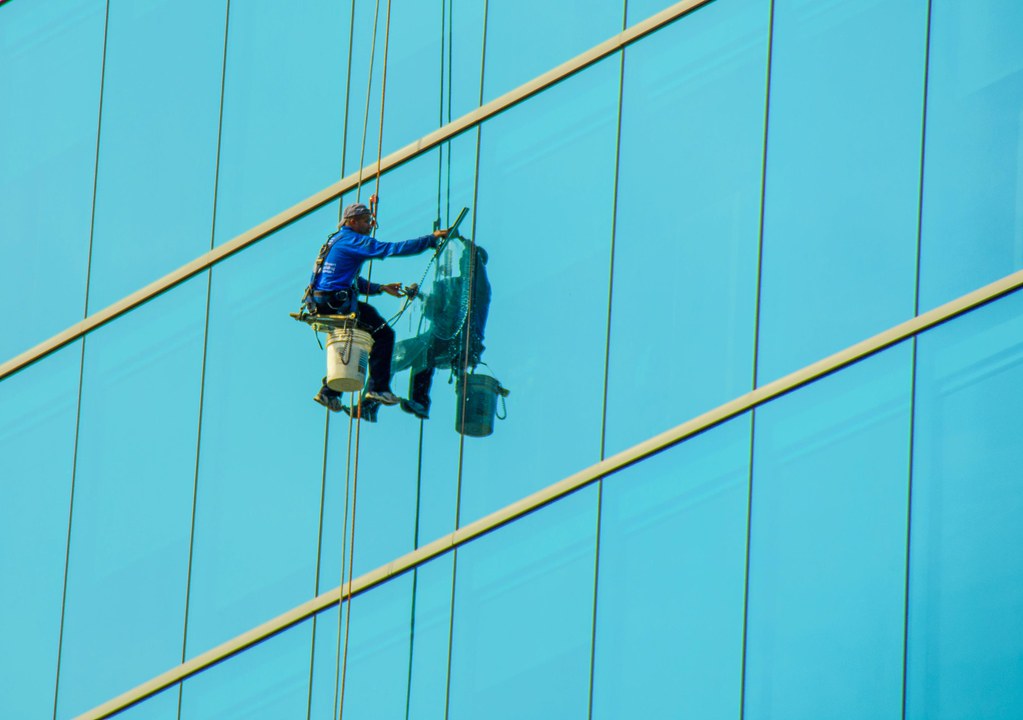
When the glass is above pole height
Water-fed poles handle most two-storey work, but Christchurch has plenty of glass beyond their reach — apartment blocks in the central city, office facades along the avenues, atriums and skylights inside commercial buildings, and hillside homes where the downhill face drops three or four levels. That glass still needs cleaning, and it needs technicians with the right access equipment and a proper plan for working at height.
High-reach work starts long before anyone leaves the ground. We assess the building, the anchor options, the drop zones and the weather window — Canterbury's nor'westers and sudden southerly changes call off more high days than anything else, and no pane is worth rushing in gusty conditions. Pedestrian areas below are managed and signposted, building managers get a clear schedule, and every descent is planned with redundancy in the rigging.
Planned, documented, repeatable
Body corporates and facility managers value one thing above all: a clean they can verify without abseiling down to check it. We photograph elevations before and after, report panes that need attention — failed seals, cracked glass, perished gaskets — and keep records so the next clean picks up exactly where the last one finished. Regular clients typically run six- or twelve-monthly cycles, timed to clear winter grime in spring and polish everything before the end-of-year shutdown.
Because every building is different, high-reach pricing is always quoted from a site visit or detailed photos — height, access, glass area and frequency all shape the number. Smaller jobs like hillside home facades or single atriums are absolutely welcome; not everything high is a high-rise. If you're a committee weighing up providers, ask us for a scope breakdown you can compare line by line — transparent quoting is part of doing it right.
- Multi-storey facades and curtain-wall glazing
- Atriums, skylights and internal high glass
- Body corporate and common-area glass
- Job-specific access and safety planning
- Drop-zone management to protect people below
- Before-and-after photos for managers and committees